
Jim Corbett Safari Guide 2026-27: Zones, Timings, Booking and Where to Stay
Quick answer: Jim Corbett safaris run in two daily shifts, early morning and afternoon, and are booked only through the Uttarakhand Forest Department’s portal, corbettonline.uk.gov.in. Bijrani opens on 15 October, Dhikala on 15 November, while Jhirna, Dhela and Garjia stay open year-round, weather permitting. For tigers, Dhikala and Bijrani are the strongest bets.
Every winter, one question comes up more than any other from guests heading to Corbett: “Which zone should we book?” It is the right question to ask, because in Corbett the zone you pick shapes almost everything about your trip, from the landscape you drive through to the gate you report to at 5:30 in the morning.
This guide pulls together what first-timers usually get wrong, what the official rules actually say, and how to plan a safari weekend that doesn’t fall apart over a sold-out permit.
Why is Jim Corbett worth the trip?
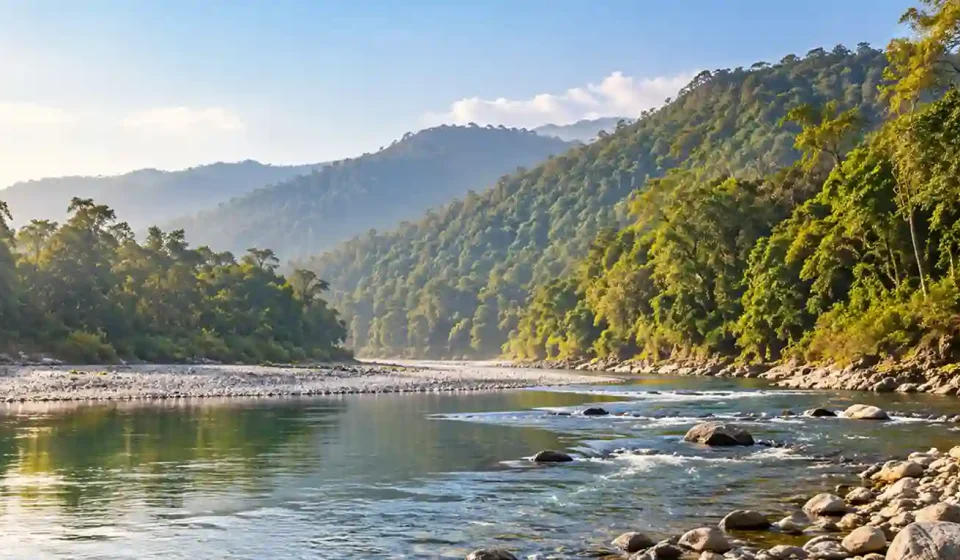
Corbett is India’s oldest national park. It was set up in 1936 as Hailey National Park and later became the place where Project Tiger began in 1973. The reserve sits in the foothills of the Kumaon Himalaya, with the Ramganga river cutting through sal forest, grassland (locally called chaur) and dry riverbeds.
What makes it special isn’t only the tiger. You’ll see herds of wild elephants on the Ramganga banks, gharials sunning on sandbanks, spotted deer by the hundred and more than 600 recorded bird species across the wider landscape. Even a safari without a big cat rarely feels empty.
It also helps that Ramnagar, the base town, is roughly 250-260 km from Delhi. That is a 5 to 6 hour drive, which puts Corbett firmly in long-weekend territory.
What are the safari zones in Jim Corbett?
Corbett is split into separate tourism zones, each with its own entry gate. You cannot move between zones on one permit, so choose carefully.
Dhikala zone
- Entry gate: Dhangarhi
- Open: 15 November to 15 June
- Known for: Vast grasslands, the Ramganga reservoir, elephant herds and some of the park’s best tiger sightings
- Good to know: Day visitors enter on a shared 16-seater canter. Private jeeps go in only if you have a night stay booked at a Dhikala forest rest house.
Bijrani zone
- Entry gate: Amdanda (close to Ramnagar)
- Open: 15 October to 30 June
- Known for: Dense sal forest opening into grassland, high tiger density and easy access from town
- Good to know: Bijrani permits are among the first to sell out, especially on weekends and holidays.
Jhirna zone
- Open: Year-round, subject to weather
- Known for: Drier forest, sloth bear sightings and decent tiger activity
- Good to know: Your best option if you’re visiting in the monsoon.
Dhela zone
- Open: Year-round, subject to weather
- Known for: One of the newer ecotourism zones, about 15 km from Ramnagar, with mixed forest and grassland
- Good to know: Usually has better permit availability than Bijrani or Dhikala, so it makes a smart backup.
Garjia, Durga Devi, Sonanadi and the buffer zones
Garjia is open through the year. Durga Devi, popular with birders for its hilly terrain and river views, and Sonanadi on the Kalagarh side generally open from mid-November. Phato and Sitabani sit in the surrounding forest divisions rather than the core reserve, and are worth booking when the core zones are full.
Which zone is best for tiger sightings?
Dhikala and Bijrani are the two zones most guides will point you to. Both have open grassland, permanent water and a strong prey base, which is what keeps tigers in the area.
If you can only manage one safari, book Bijrani for convenience. If you can plan a few weeks ahead and want the classic Corbett experience, aim for a Dhikala canter or, better still, a Dhikala night stay. And if both are sold out, don’t cancel the trip. Jhirna and Dhela have produced plenty of good sightings, and you’ll share the track with far fewer vehicles.
What are the Jim Corbett safari timings?
Safaris run in two shifts a day:
- Morning safari: Gates open around 6:00 AM (slightly later in deep winter)
- Afternoon safari: Gates open around 2:00 to 2:30 PM, finishing before sunset
Each drive lasts roughly 3 to 3.5 hours. The forest department adjusts exact timings by season and zone, so check your permit for the reporting time printed on it.
Morning or afternoon? Mornings in winter are cold, misty and atmospheric, and animals are often active along the tracks. Afternoons in March to June tend to be better for tigers because heat pulls them towards water. If you can do both, do both.
Jeep safari vs canter safari: which should you book?
- Jeep (gypsy) safari: Open 4×4, up to 6 visitors plus driver and guide. Available in every zone except Dhikala for day visitors. More flexible and more private.
- Canter safari: Shared 16-seater open bus, available only in Dhikala for day visits. Covers more ground, but you can’t control stops and it’s noisier.
For families or small groups, a jeep in Bijrani or Jhirna is usually the better experience. For solo travellers or couples who want to see Dhikala without a night stay, the canter is the way in.
How do you book a Jim Corbett safari?
All permits are issued by the Uttarakhand Forest Department through corbettonline.uk.gov.in. Here’s how the process works:
- Pick your zone, date and shift (morning or afternoon).
- Add every visitor’s name, age and ID details. The same photo ID must be carried on the day.
- Complete the booking online. The gypsy and guide are arranged separately, usually at the gate or through your hotel.
- Download and print the permit, or keep it ready on your phone.
Bookings open well ahead of the date, and high-demand slots in Bijrani and the Dhikala canter can sell out within hours of release. For weekends between November and February, start looking as soon as your dates are fixed.
A quick word of caution: plenty of private websites look official. If you book through anyone other than the forest department portal, confirm that you’re getting a genuine core-zone permit and not a buffer-zone drive.
When is the best time to visit Jim Corbett?
- Mid-October to February: Pleasant days, cold mornings, green forest and excellent birding. Dhikala opens in mid-November, which makes this the most popular season.
- March to June: Hot, dry and the best window for tiger sightings, because animals gather near shrinking water sources.
- July to mid-October: Monsoon. Most core zones shut as forest roads wash out. Jhirna, Dhela and Garjia stay open, subject to weather, and the forest is at its greenest.
Tips that make a real difference on safari
- Dress in earthy colours. Olive, khaki and brown blend in. Skip bright reds and whites.
- Layer up in winter. An open jeep at 6 AM in December is genuinely cold. Bring a jacket, cap and gloves even if the afternoon will be warm.
- Carry the exact ID used in your booking. Mismatched IDs are the most common reason people are turned back at the gate.
- Keep your voice low and phone on silent. Your guide is listening for alarm calls from deer and langurs, which is how most tigers are found.
- Pack binoculars. They turn a distant shape on the riverbank into a real sighting.
- Don’t push the driver to chase a sighting. Speed limits and track rules exist to protect animals and you.
How many days do you need in Corbett?
Two nights is the sweet spot for most visitors. It gives you three or four safaris across two zones, which noticeably improves your odds of a tiger. With only one night, try to book an afternoon safari on arrival day and a morning safari the next day before you head back.
Where should you stay for a Jim Corbett safari?
Stay close to Ramnagar so you aren’t racing the clock before a morning safari. Aura by Xperience is our luxury resort in the Corbett wilderness, a calm base for early safari starts and quiet evenings close to the forest. Our team can also guide you through safari timings and zone choices when you book your stay.
Planning to combine Corbett with the hills? Nainital is around a three-hour drive away. Pair a safari with a couple of nights at Seasons by Xperience for a forest-and-lake trip in one go.
Frequently asked questions
Can I book a Jim Corbett safari on the same day?
Occasionally, if there are cancellations or spare current-booking quota, but it’s not something to rely on. In peak season, book online as early as possible.
How many people are allowed in one safari jeep?
A maximum of six visitors per jeep, plus the driver and the forest guide.
Is Jim Corbett open during the monsoon?
The core zones, including Dhikala and Bijrani, close during the monsoon. Jhirna, Dhela and Garjia remain open through the year, subject to weather and forest department orders.
Which is better, Dhikala or Bijrani?
Dhikala has bigger landscapes and the famous grasslands, but day visitors must use a canter. Bijrani offers private jeep safaris, is closer to Ramnagar and has excellent tiger density. For a short trip, Bijrani is easier; for the full Corbett experience, choose Dhikala.
Is the morning or evening safari better?
Mornings are best in winter for atmosphere and active wildlife. Afternoons are often better from March to June, when heat drives animals to water.
Do I need to carry ID for a Corbett safari?
Yes. Every visitor must carry the original photo ID entered at the time of booking.
[…] escapes from Delhi. The trick is to book your safari permit before you book anything else. Our Jim Corbett safari guide walks through zones and […]
Салон аппаратной косметологии
Побочные эффекты
Цены на процедуры вы можете узнать на страницах соотвествующих услуг https://mycosmi.ru/services/apparatnyy-massazh
Вариативность в отделке и цветовых решениях